Skip to content

Compare

Noteable vs spreadsheets

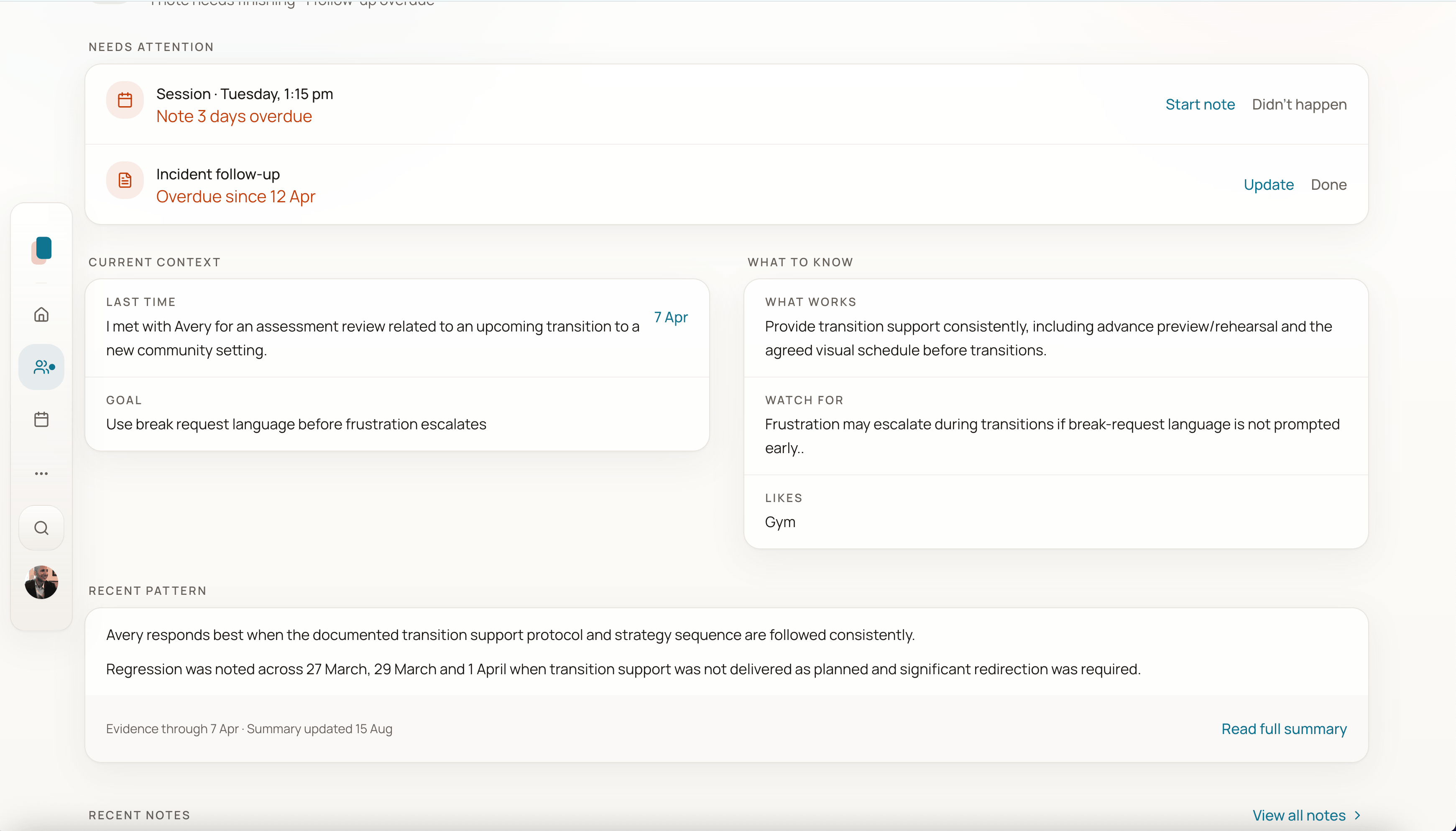
Spreadsheets are workable for very small teams and very simple workflows. Noteable becomes the stronger fit when session documentation, supervision, handovers, and reporting need one structured evidence chain instead of manual tab maintenance.

Short answer

A spreadsheet can track counts, deadlines, or simple service metrics. It is much weaker at holding session-level context, intervention detail, clinical continuity, and cross-clinician supervision signal in the same place.

Noteable is built to capture session evidence directly, tie it to goals and interventions, and surface patterns that teams usually try to reconstruct manually from notes and spreadsheets later.

If you only need a lightweight tracker for a tiny workflow, a spreadsheet may still be enough. If you need a defensible clinical record across multiple clinicians, a spreadsheet usually breaks before the team realises it.

Best fit for Noteable

When Noteable is the better fit

  • Multi-clinician teams that need one consistent way to capture and review session evidence.
  • Services where behaviour support plan consistency and intervention fidelity matter.
  • Teams preparing supervision sessions or progress reports from live session records rather than retrospective admin.
  • Practices trying to reduce hidden documentation risk as they grow.

Best fit for Spreadsheets

When Spreadsheets is the better fit

  • Very early-stage services with one owner and one very simple tracking need.
  • Temporary workflows where the sheet is acting as a stopgap rather than the long-term record.
  • Low-risk tracking tasks that do not depend on session-level clinical detail.

At a glance

Where the products differ

AreaNoteableSpreadsheets
Primary jobStructured clinical evidence and team-wide visibility.Manual tracking and lightweight tabular organisation.
Session contextCaptured directly inside the session record.Usually summarised after the fact or omitted.
CollaborationBuilt for cross-clinician continuity and supervision.Often dependent on manual updates and spreadsheet discipline.
Intervention fidelityVisible through structured planned-versus-delivered records.Requires manual upkeep and separate note review.
ReportingEvidence-backed outputs linked to session history.Usually requires separate report writing and manual reconstruction.
Growth riskDesigned to hold up as teams and case complexity grow.Gets fragile as staff, clients, and review demands increase.

Where spreadsheets usually start to fail

Spreadsheets usually start to fail at the points where clinical work needs nuance. One tab might track goals, another may track sessions, and a separate folder may hold notes, but the relationships between them are weak. That means supervisors still need to ask people what actually happened, which interventions were delivered, and whether the sheet is current.

The hidden cost is not only time spent updating cells. The bigger cost is that the spreadsheet becomes an extra layer sitting beside the real record rather than a reliable extension of it. As a result, fidelity problems, handover gaps, and reporting weaknesses stay harder to see until the next review cycle.

Ready to see it?

Diagnose the documentation exposure before the next review meeting does.

Take the free team report to quantify where delivery is drifting, where the evidence layer is thin, and which single documentation fix should come first.

12 questionsAbout 2 minutesInstant scoreFull report unlocked by email