Skip to content

For small NDIS teams

Shared client notes.Ready for the next worker.

Speak or type a recap of your session. Review the AI-assisted draft, then save useful details for the next colleague to check against the original notes.

One colleague records the session. The next can check what matters. Start with one client and two workers before asking the whole team to change.

14 days free · No card required · Up to 5 members

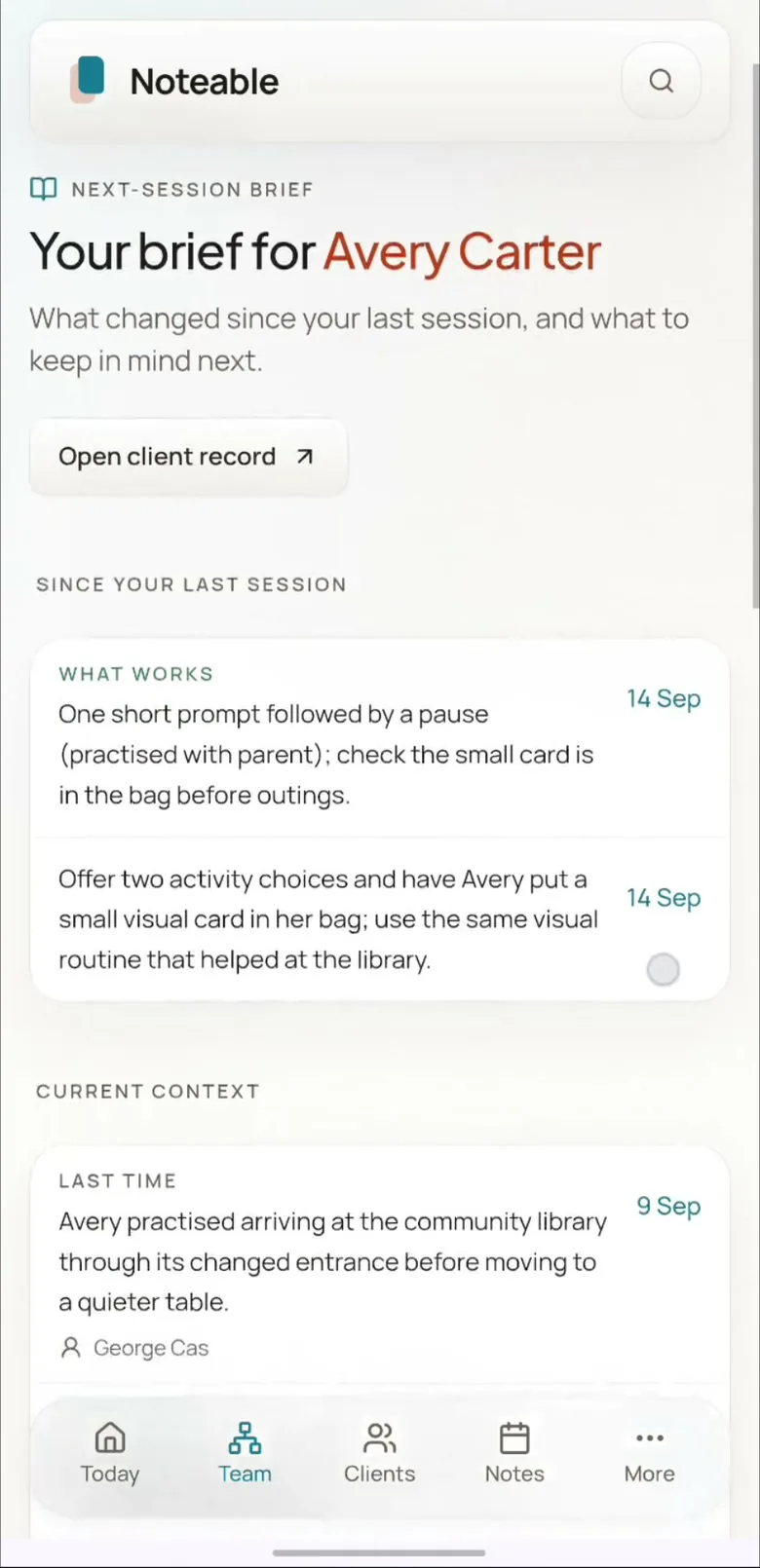
A next-session brief for Avery Carter, with confirmed details and source-note links. Fictional demonstration data.
  • Reviewable evidence trail
  • Records hosted in Sydney, Australia
  • Export your data anytime
  • Built for Australian NDIS providers

A shared-client example

Can the next worker find what matters?

Access to the notes is the starting point. Before the next visit, a colleague needs to see what helped, what changed, and what still needs doing.

  1. 01

    An earlier session

    Avery prefers starting at a quieter table. The worker records that preference and confirms it on the client record.

  2. 02

    The 21 September library session

    Noise at the self-check area unsettles Avery. She asks for a break (“I need a minute”) and comes back after about five minutes. The worker records what helped and what to check at the next library visit.

  3. 03

    The next worker’s preparation

    An authorised colleague can check the quieter-table preference, the open follow-up, and the source notes behind them.

Illustrative example using the Avery Carter demonstration record. Colleagues review the context and decide what is relevant today.

app.noteable.com.au
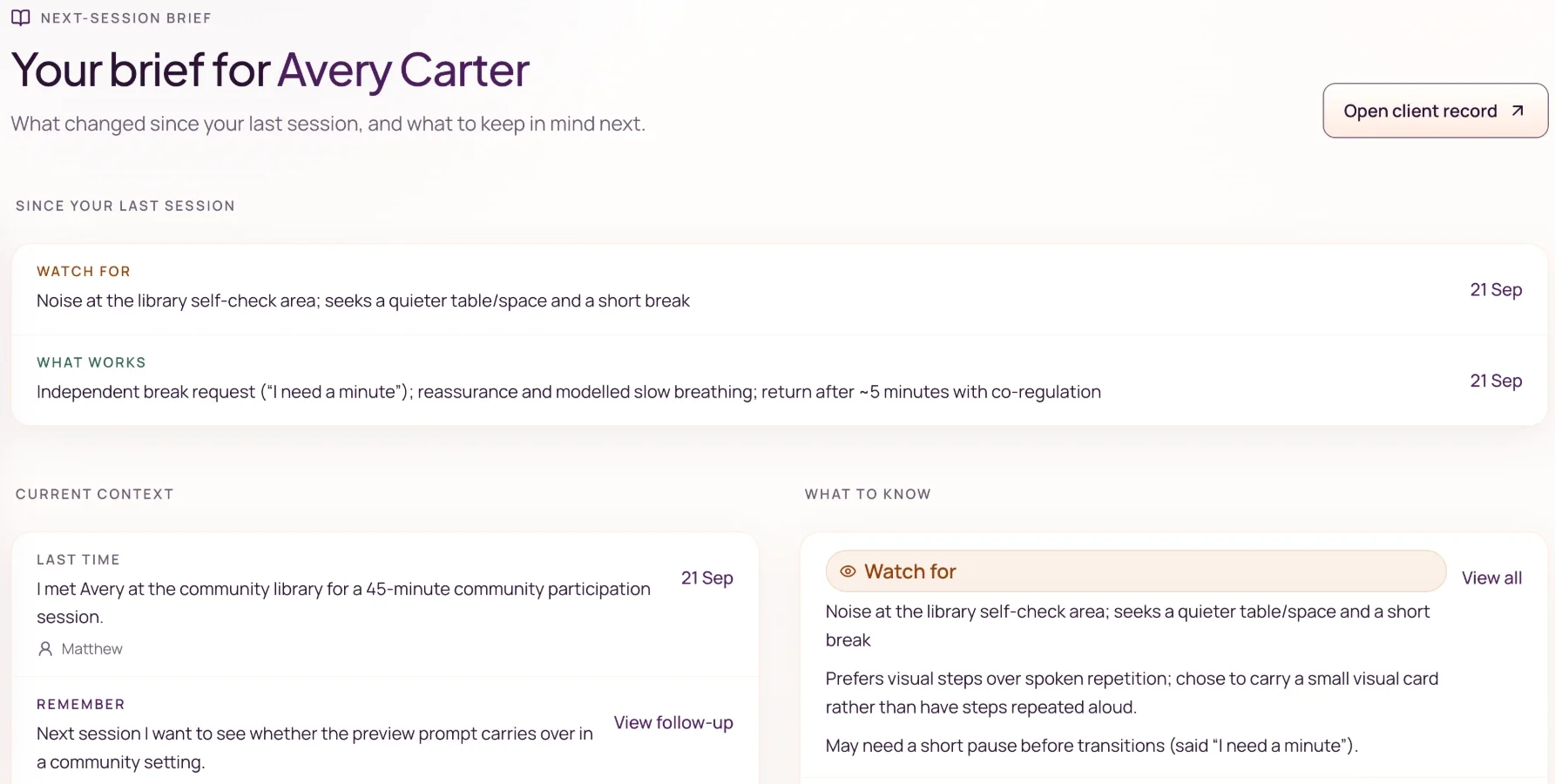
Next-session brief for Avery Carter: noise at the library self-check area and a quieter table, what works, the last library session, a reminder for next time, and what to know.

Your brief for Avery Carter

What changed since your last session

  • Watch for

    Noise at the library self-check area; seeks a quieter table or space and a short break.

    From your notes · 21 Sep

  • What works

    Independent break request (“I need a minute”); reassurance and modelled slow breathing; return after about 5 minutes with co-regulation.

    From your notes · 21 Sep

  • Last time

    I met Avery at the community library for a 45-minute community participation session.

    Finalised note · Matthew · 21 Sep

  • Remember

    Next session I want to see whether the preview prompt carries over in a community setting.
    Follow-up from your note

Open the next-session brief to find the quieter table, last library session, and what to check. Avery is a fictional demonstration client.
View the next-session brief full size

From one session to the next

Your own notes. A useful shared record.

Each session keeps its author. Changes to the record retain a history of who changed what and when.

  1. 1

    Capture and review

    Speak or type your recap. Check and edit the draft before finalising your session note.

  2. 2

    Confirm what carries forward

    Review suggested details and keep useful client information and follow-ups with the record. Earlier context stays available alongside newer sessions.

  3. 3

    Prepare and check

    An authorised colleague opens the client’s context before the next session and can check the source notes behind it.

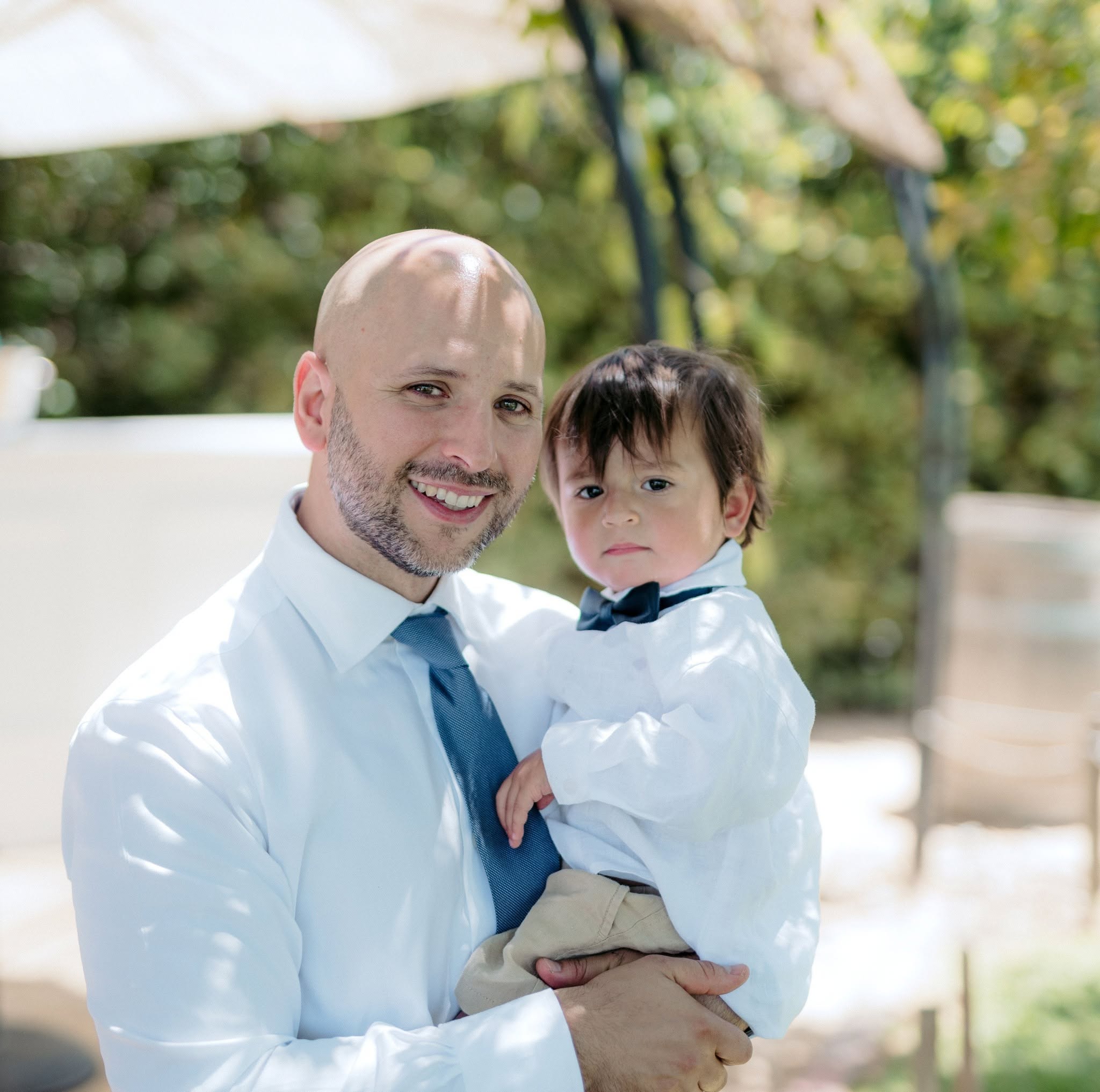
Matt Giglio holding his son outdoors.
Matt Giglio, founder of Noteable, with his son.

A note from Matt

I’m Matt, Noteable’s founder in Adelaide. As a parent, I want the people supporting my child to understand what has happened and what needs following up. I built Noteable to help make session notes useful to the next person, not just finished.

Matt Giglio · Founder, Noteable

FAQ

Before you invite your team

Access, review, trial terms, and what stays in the tools you already use.

Who can see a client’s notes?

Access follows your workspace roles and client assignments. Shared records are for colleagues authorised to access that client, not automatically everyone in the organisation.

Are we editing one document together?

Each session has its own author and review process. Sharing happens through the client record and its confirmed context, rather than several people typing into one document.

Does AI decide what becomes part of the record?

No. You review and finalise session drafts, and review suggested client details before confirming them. AI output can be wrong. Check it against the session information and your judgement.

Read the Integrity Standard

Do we have to replace our existing software?

Keep billing, payroll and NDIA claiming in your existing tools. Use Noteable for the reviewed notes and shared context described here. During your trial, check how your team will move notes between systems, including any copying or exporting. Confirm whether automatic syncing is supported before relying on it.

What does the trial include, and what happens afterwards?

The standard trial lasts 14 days from your first generated draft and supports up to five members without a card. Afterwards, the workspace becomes read-only until the owner upgrades. Base is A$29 per active user per month, including GST. Paid workspaces support up to 15 members.

See full pricing

Where are records stored, and can we export them?

Client records and workspace data are hosted in Sydney. Third-party AI providers may process content used for drafts and summaries. You can export records; check the Privacy Policy for processing, retention and deletion details.

Read the Privacy Policy

Still have questions? Email us at hello@noteable.com.au

Start small. Carry the context forward.

Try it with one client and two workers.

Finalise one note and confirm a useful detail. Then invite a colleague with access to that client to check the context before their next session.

14 days free · No card required · Up to 5 members

Then A$29 per active user/month, including GST. A$58 for two or A$145 for five.

Invited to a pilot by Matt? Follow your invitation for the agreed trial terms and setup.